
Hafiz Saeed-backed Allah-o-Akbar Tehreek (AAT) had fielded 265 candidates -- including 13 women -- countrywide.

Pakistan Prime Minister Nawaz Sharif is the country's richest parliamentarian with assets of over Rs 1.43 billion, according to data released by the Election Commission of Pakistan.

She has alleged that she was sexually abused after her forced marriage to a Pakistani man at gunpoint.

Mulk, 67, is likely to be sworn in on Friday, June 1.

The timing of these transfers, while being projected as routine, is significant in both strategic and political terms, asserts Rana Banerji, who headed the Pakistan desk at the Research and Analysis Wing, India's external intelligence agency.

Around 100 lawmakers from the Pakistan Muslim League-Nawaz and Pakistan Peoples' Party submitted the no-confidence motion before the National Assembly Secretariat on March 8, alleging that the Pakistan Tehreek-e-Insaaf government led by Khan was responsible for the economic crisis and the spiralling inflation in the country.

'This is murder and criminality of the worst form which is beyond human beings, but people still think that these murderers, known as the Tehrik-e-Taliban Pakistan are human beings,' says Mohammad Tahseen from Lahore.

Awais Ali Shah, a lawyer himself, was abducted last month from Karachi. He was found in Tank.

Jalaluddin Haqqani was closely tied to Al Qaeda leaders and had played a key role in supporting the terror group in both Afghanistan and Pakistan.

The strategic Karakoram Highway, which links Kashghar in Xinjiang with Gilgit and Abbottabad through the KhunjerabPass, has been damaged at more than 50 places from Gojal to Besham, leaving hundreds of commuters and over 50 foreign tourists stranded.
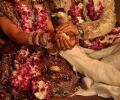
After decades of delay and inaction, the Hindu minority community in Pakistan will soon have a marriage law as a parliamentary panel has unanimously approved the Hindu Marriage Bill.

The apex court took suo motu notice of the case after patron-in-chief of the Pakistan Hindu Council Dr Ramesh Kumar met the Chief Justice on Thursday.
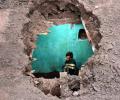
The shelling from across the border started in Nowshera sector around 12.30 pm, ending over 12-hour-long lull in the border skirmishes which intensified after India's pre-emptive strikes on Jaish-e-Mohammed's terror camps at Balakot in Khyber Pakhtunkhwa province in Pakistan on Tuesday.

The US has also urged the two South Asian neighbours to avoid further military action.

'The world's patience on terrorist safe havens is running thin and that is not good for Pakistan'
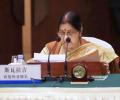
Sushma said after the Pulwama terrorist attack, Pakistan instead of taking seriously the call for the international community to act against the JeM and other terror groups denied any knowledge of the attack and out rightly dismissed claims by the JeM.

The press briefing seemed a deliberate decision to let the army convey its angst to Imran directly, observes Rana Banerji, who headed the Pakistan desk at RAW, India's external intelligence agency.

A powerful car bomb exploded outside a Shiite imambargah at a busy market.

Nine Chinese engineers were among 13 people killed on Wednesday when a bus carrying construction workers in northwest Pakistan's mountainous region was "attacked", according to officials and eyewitnesses.
Pakistan's Hindus were set to get an exclusive personal law to regulate marriages after the National Assembly unanimously adopted the Hindu Marriage Bill, 2017, on Thursday.

A day after the Taliban freed over 250 prisoners from a high-security Pakistani prison, a top commander of the terror outfit has said they took a month to plan the assault and spent Rs 1 crore to execute it with military-like precision.

Khan, who faced his toughest political test since assuming office in 2018 due to defections in his party and cracks in the ruling coalition, in a surprise announcement during an address to the nation on Sunday said he had advised the president to 'dissolve assemblies'.
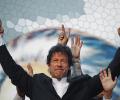
India has slammed Pakistan for its decision to hold elections in Gilgit-Baltistan and said any action to alter the status of the militarily-occupied region has no legal basis.

Three burqa-clad Taliban terrorists stormed the training institute and opened indiscriminate fire, killing at least 12 people, half of them students, before being shot dead by security forces on Friday.

A shocked Pakistan on Wednesday began observing 3 days of national mourning for the 141 people, mostly children, massacred by the Taliban suicide attackers in horrendous terror attack in northwestern city of Peshawar.

The military establishment is in no mood to forgive or forget Imran's anti-military utterances, observes Rana Banerji, who headed the Pakistan desk at RAW, India's external intelligence agency.

The twin attacks came as former prime minister Nawaz Sharif along with his daughter Maryam returned to the country to face arrest in a corruption case.

The rather amateurish, even ham-handed, attack would lend some credence to a 'false flag' theory, of the PTI leadership staging this incident, to provide new impetus to a flagging agitation, notes Rana Banerji, who headed the Pakistan desk at RAW, India's external intelligence agency.

Pakistan Meteorological Department's earthquake centre said the 5.8-magnitude earthquake was located near the mountainous city of Jehlum in Punjab province.


Thousands of anti-government protesters led by opposition leader Imran Khan on Saturday reached Islamabad with an aim of ousting Pakistan Prime Minister Nawaz Sharif.
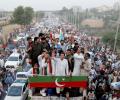
'Nobody wants him to gain power.' 'But saying that all these players together conspired against Imran Khan and had him arrested would be in the realm of conjecture but possibilities cannot be ruled out.'
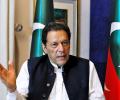
'The senior army leadership has no interest in reconciling with Imran Khan, and no interest in seeing him return to power.'
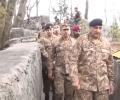
General Bajwa, unlike many of his predecessors, believes the Pakistan army's long-term interests lie in reducing tensions with India, reports Ajai Shukla.

There were no immediate reports of any loss of life or damage to property.

India summoned the Pakistani charge d'affaires in New Delhi and lodged a firm protest, expressing grave concerns at this reprehensible incident and the continued attacks on the freedom of religion of the minority communities and their places of religious worship in Pakistan.
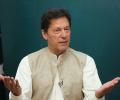
While in power, Khan repeatedly talked about making Pakistan an Islamic welfare state. However, he failed to fix the economy and the basic problem of keeping the prices of commodities in control.
The Hindu Marriage Bill 2017, which is the first elaborate Hindu community's personal law, was adopted by the Senate on Friday.
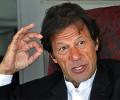
Pakistan's election commission has expressed its inability to hold general elections within three months due to legal, constitutional and logistical challenges, according to a media report on Tuesday.

Darul Uloom Haqqania madrassa, one of Pakistan's largest and oldest seminaries and dubbed as a 'university of jihad' by its critics for helping sow violence across the region for decades, has educated more Taliban leaders than any school in the world and its alumni now hold key positions in Afghanistan, according to a media report.
